
SOURCE: Ken Macon via Reclaim The Net
The future of proving who you are comes with a conspicuously unfinished privacy story.
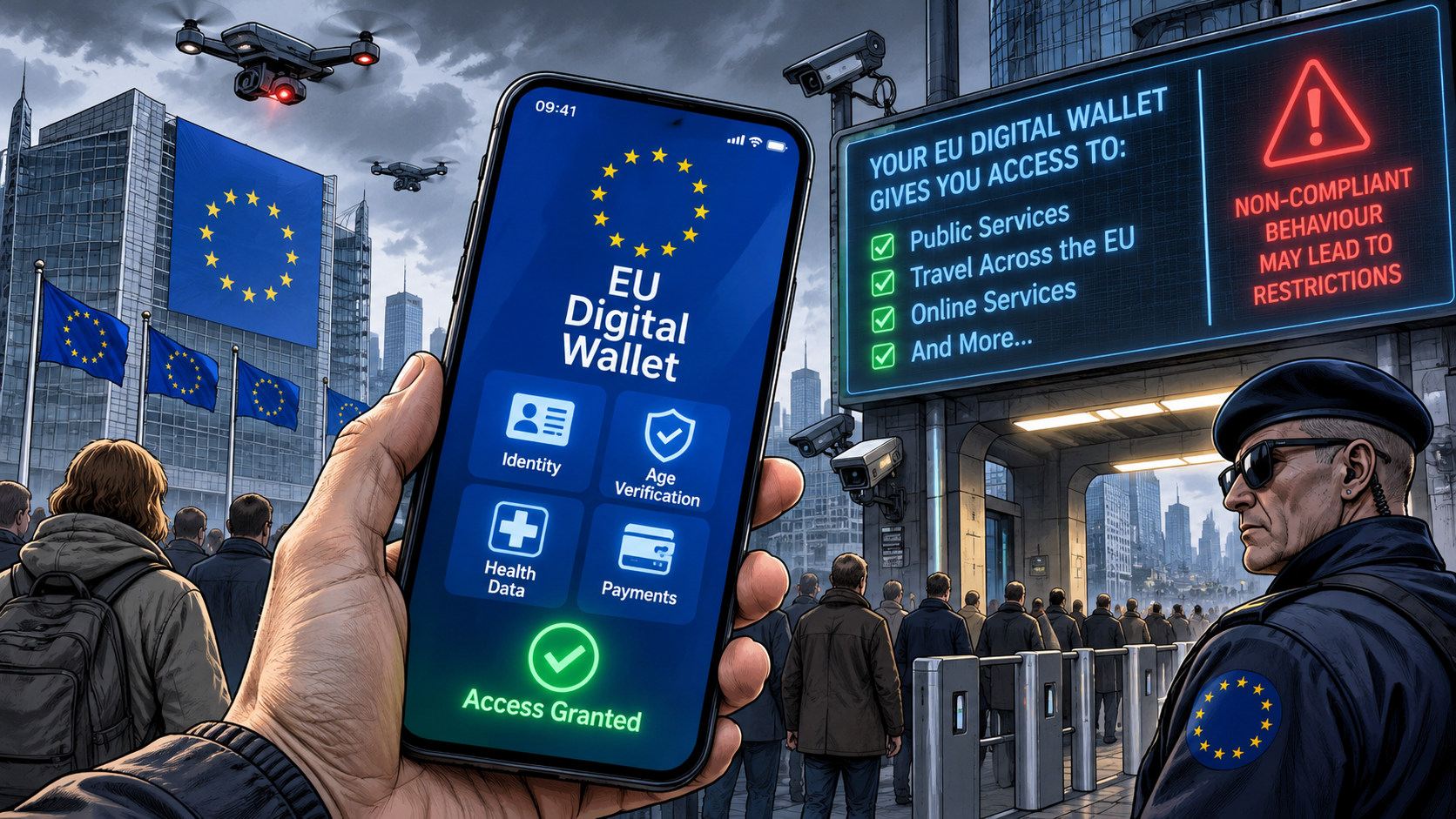
The European Union’s Digital Identity (eID) Wallet is supposed to be a digital equivalent of a physical wallet – containing payment cards, driver’s licenses, and other documents. But it is also designed to offer more than that – namely, it will be a way to log in to websites and apps with a single digital ID.
EU law says that member states must offer every citizen this digital wallet by the end of 2026. The Commission’s policy page puts it like this: “The framework mandates Member States to provide EU Digital Identity (eID) Wallets to citizens by the end of 2026.”
The Commission’s own website dedicated to the digital wallet tells people to “Discover the many ways that EU Digital Identity Wallets will protect your privacy and security” and says the wallets “will protect your privacy and ensure you get to decide how your data” is used.
Now, cryptographers are saying that the first version of the digital ID scheme may not live up to these promises.
The deadline for member countries to start offering the wallet means that the first version is the one that Europeans will get. And, according to IEEE Spectrum, that will not be the private and secure solution that the Commission has been advertising.
The report looks into how the digital wallet is designed to work, and how it might fail to protect its users’ privacy. For example, when a website asks for proof of age, the digital wallet can show only that – that the user is over 18, for example – without revealing the date of birth. But the website still gets to keep the digital signature that verified this piece of information, and other identifiers that can be used to track people.
While the law says that should not happen, it may, because two different websites can compare their records and figure out that the same person visited them, even if they don’t know who that person is.
Anna Lysyanskaya, a computer science professor at Brown University, explained that even if a person had multiple credentials, the government office that issues them would know who has which, and that information could be used to link those credentials back to one person.
Lysyanskaya was among 16 cryptographers who in June 2024 sent feedback to the Commission, warning that some of the design elements of the EU Digital Identity (EUDI) fell short of the privacy requirements. The letter said that without the ability to make sure that people cannot be followed as they use their digital credentials, one entity could “trace this user’s activities throughout the system and observe everywhere the user has been, like a virtual stalker.”